 International
  Bahrain
  Cambodia
  China
China  Hong Kong
  India
India  Indonesia
  Ireland
  Italy
Italy  Japan
Japan  Malaysia
  New Zealand
  Philippines
  Singapore
  South Africa
  Taiwan
  Thailand
  United Arab Emirates
  United Kingdom
  United States
  Vietnam
 -
Services --
-
- Digital Solutions
- Document Scanning and Imaging
- Digital Contract Management
- Digital Invoice Processing
- Digital Mailroom
- Employee Management System (HRDMS)
- Visitor Management System (VIZIO)
- EffiDocX (ECM)
- Information Consulting
- Employee Onboarding
- Digital Signatures
- Fixed Asset Management
- Source Code Escrow
 Records Management
  Digital Solutions
  Banking, Finance and Insurance Solutions
  Secure Destruction
  By Industry
 Know - not assume - that your critical collateral is exactly where it should be.
In BFSI operations, the real risk is not storage. It is uncertainty at the moment of need when a customer closes a loan, an auditor requests proof, or regulators demand timely document retrieval.
Physical verification is slow, disruptive, and risks damaging irreplaceable documents- so it is often avoided at scale.
Transparent Vault helps you eliminate that uncertainty by enabling verified, contactless validation of critical documents without opening a box.

The problem BFSI teams face today
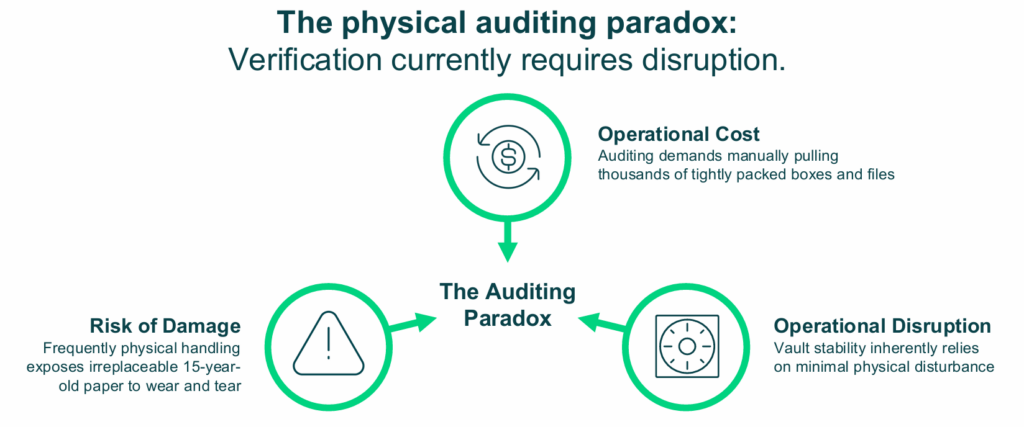
Most BFSI vault environments are built for secure storage, but not for continuous verification.That creates three structural challenges:

You rely on system records, not physical confirmation
Verification is only done when forced (audit / retrieval events)
Issues surface at the worst possible moment - when the file is needed
Result:
A growing gap between what your system shows and what is physically present in custody.
The real business riskFor BFSI institutions managing collateral across home loans, LAP, MSME and mortgage portfolios, this gap has direct business impact:
- Missed RBI timeline commitments on document return
- Retrieval delays during loan closures
- Audit pressure with incomplete physical validation
- Legal and reputational exposure if documents cannot be located
The solution: Verified custody, without disruption
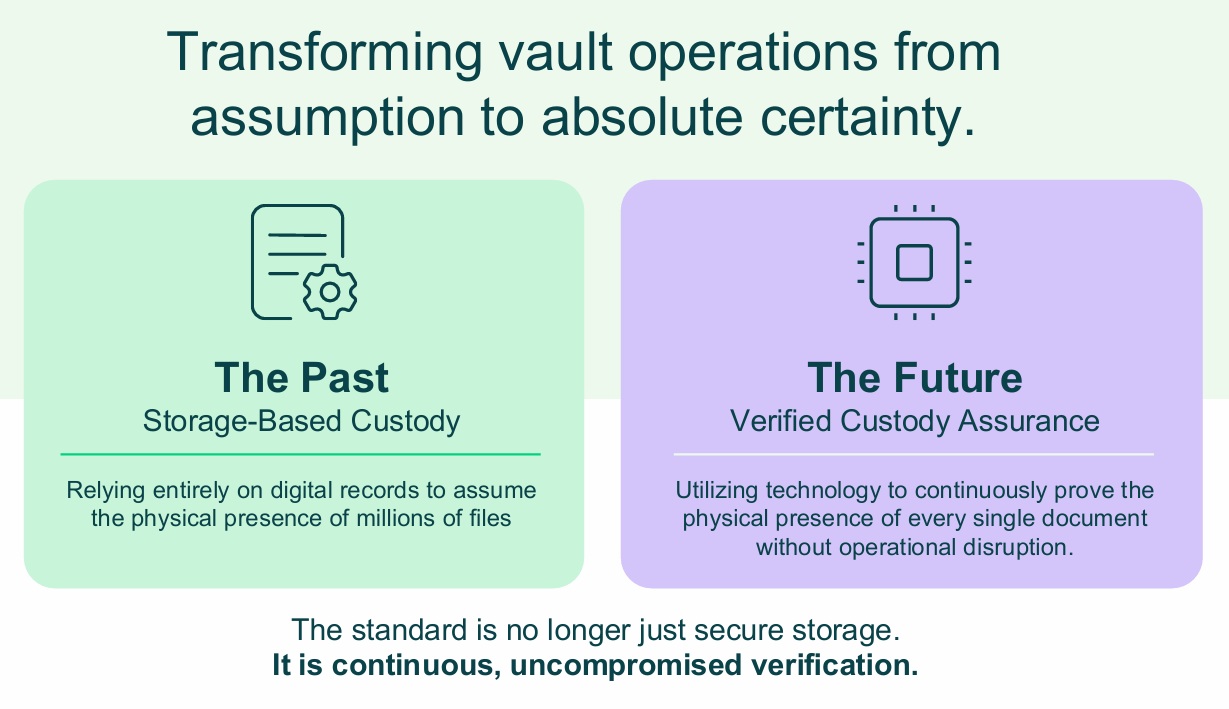
Transparent Vault addresses the core problem – not by adding more process, but by enabling non-disruptive, continuous verification of physical files.
Instead of opening boxes and manually checking files, BFSI teams can validate physical presence against system records instantly.
What changes for your BFSI operations
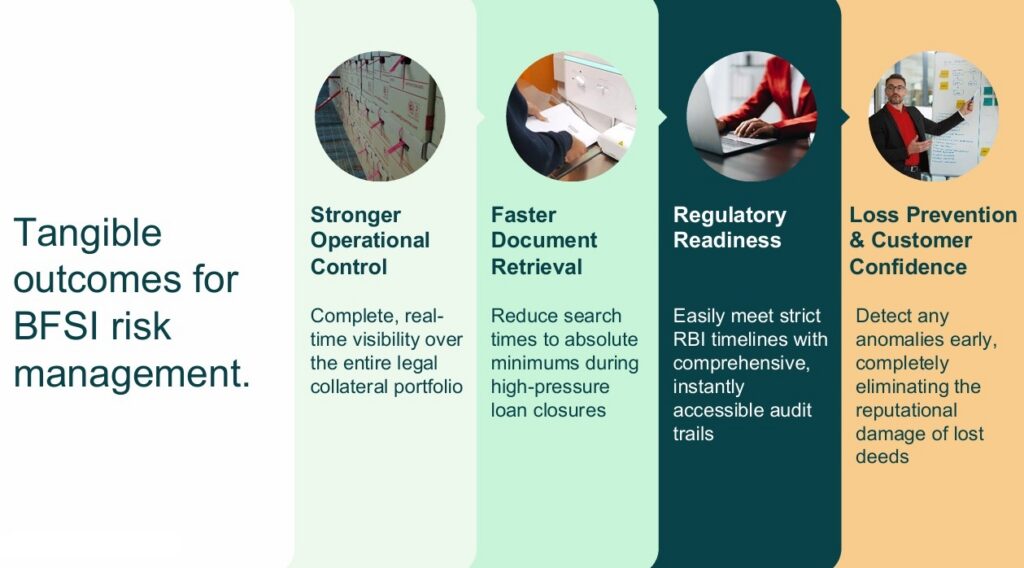
From uncertainty → verified control
Know your documents are physically present, not just recorded in the system
From reactive checks → continuous readiness
Identify discrepancies early, not during audits or customer requests
From retrieval risk → retrieval confidence
Be better prepared to return documents within regulatory timelines
From disruption → operational stability
Avoid large-scale manual audits that impact vault operations
From exposure → customer and compliance confidence
Reduce the risk of lost documents, disputes, and service failures
How it works
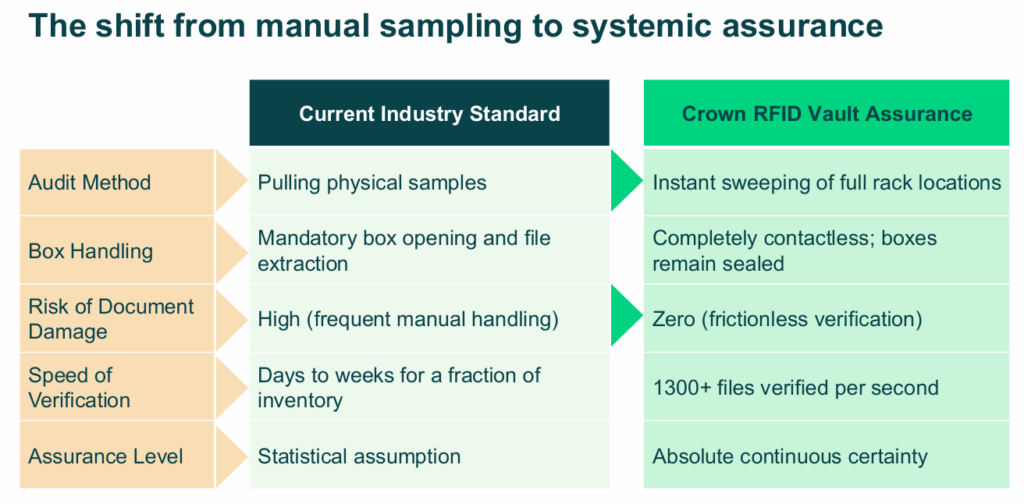
Transparent Vault uses RFID-based verification to connect physical files with digital records—without requiring line-of-sight or manual handling
- Read through sealed boxes — no opening required
- Scan multiple files simultaneously — verify at scale
- Automated validation — reduce manual dependency
Boxes containing 25–28 tagged files can be validated in seconds, with minimal disruption to vault operations

Built for BFSI custody workflows
Transparent Vault integrates into the key points where custody risk typically occurs:
This ensures control is maintained throughout the document lifecycle, not just at audit checkpoints.
Move from vault uncertainty to verified assurance
If your BFSI operations depend on timely access to original collateral documents, Transparent Vault can help you reduce risk, strengthen compliance, and improve customer confidence.Call: +91 8882 330 330Email: [email protected]
Request a walkthrough or pilot discussionFAQs
It reduces the risk of unverified or misplaced collateral documents by enabling physical validation without disruptive manual audits.
Because delays or failures in retrieving original documents can lead to RBI non-compliance, penalties, and customer dissatisfaction.
Collateral and legal documents such as title deeds, mortgage agreements, and property registration records.
It validates physical presence before and during retrieval, reducing last-minute search and failure risk.
No. Verification is contactless, reducing operational disruption and document damage.
It provides validated, more accessible audit records and improves readiness for regulatory checks.
Yes. It enables proximity-based tracking to identify temporarily misplaced records.
No. It supports ongoing custody workflows including intake, audit, retrieval, and tracking.