 International
  Bahrain
  Cambodia
  China
China  Hong Kong
  India
India  Indonesia
  Ireland
  Italy
Italy  Japan
Japan  Malaysia
  New Zealand
  Philippines
  Singapore
  South Africa
  Taiwan
  Thailand
  United Arab Emirates
  United Kingdom
  United States
  Vietnam
  Records Management
  Digital Solutions
  Secure Destruction
  Consultancy Services
From Paper HR Files to Secure, Searchable Digital Records
An international education organization in Vietnam had accumulated years of paper-based HR records containing sensitive employee information.
The organization needed a more practical way to manage these documents without compromising confidentiality. Crown provided an end-to-end digitization solution that converted physical HR files into structured, searchable digital records.
The result was easier access to information, reduced reliance on physical storage and stronger control over how records were handled throughout their lifecycle.
- Industry: Education
- Location: Vietnam
- Solution: Document Digitization
- Records: Confidential HR documents
- Project duration: Approximately six weeks
What challenge was the organization facing?
Years of employee records had accumulated in paper format.
Managing these files created several challenges:
- Physical records required storage space.
- Finding individual documents could take more time.
- Sensitive employee information required strict confidentiality.
- Records needed to remain traceable throughout processing.
- Different documents had different retention and destruction requirements.
The organization needed more than a basic scanning service. It required a structured process that could digitize the records while maintaining document security and control.
How did Crown digitize the HR records?
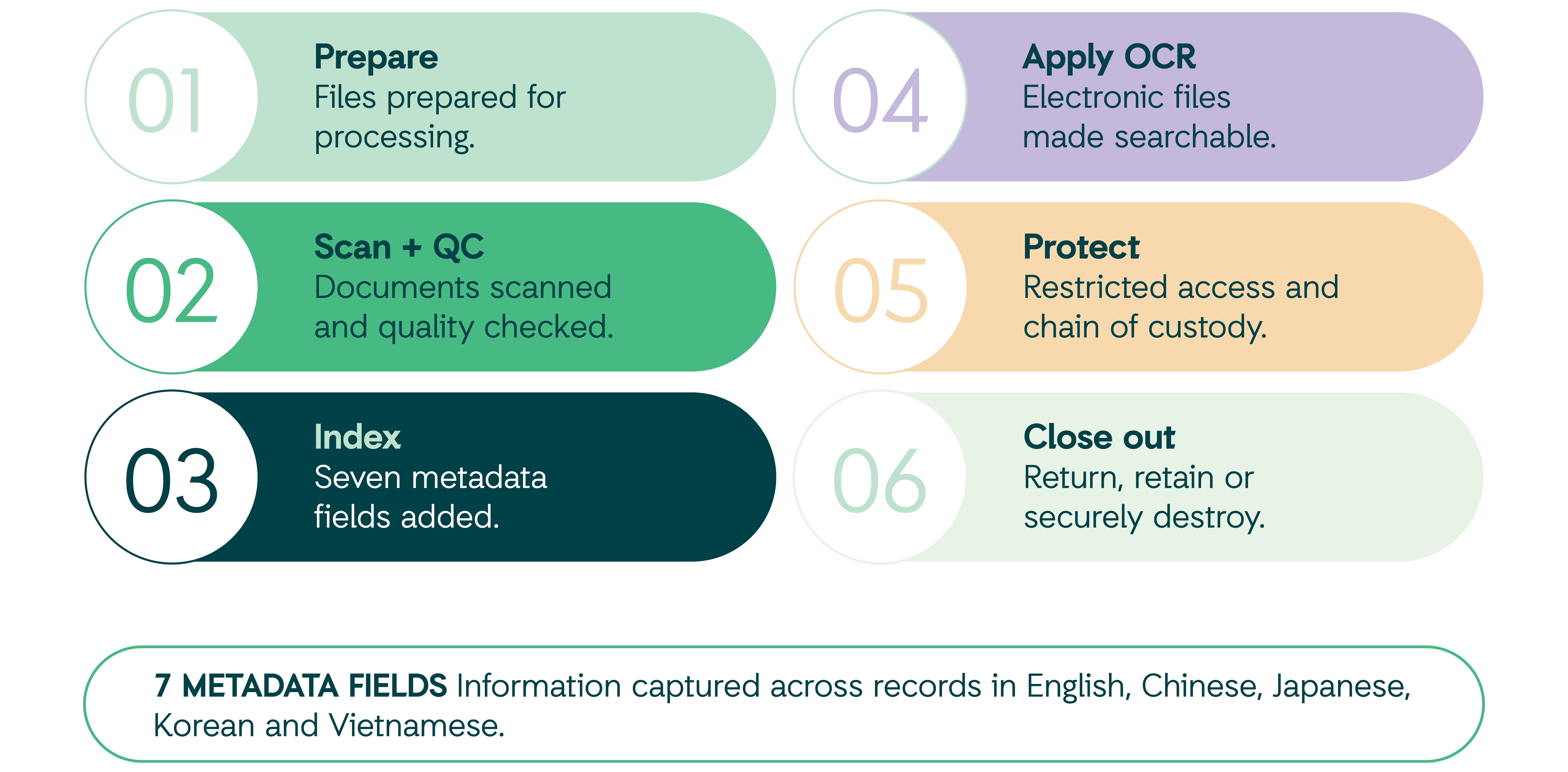
Crown provided an end-to-end document digitization process covering preparation, scanning, indexing, OCR, quality control and secure document handling.
Each stage served a specific purpose.
- Document preparation: Physical employee files were prepared before scanning to support consistent processing and image quality.
- Scanning and quality control: Documents were scanned into electronic format and checked to confirm that digital copies met the required quality standards.
- Document indexing: Each record was indexed using seven metadata fields, with information captured from documents containing a mix of English, Chinese, Japanese, Korean and Vietnamese. Structured metadata made the digital archive easier to organize and helped users retrieve the information they needed more efficiently.
- OCR processing: Optical Character Recognition, or OCR, was applied to the scanned records. OCR converts text within scanned documents into searchable information. Instead of opening files individually to locate a particular piece of information, users can search within the digitized records.
- Security and chain of custody: The HR files contained confidential employee information. Access was therefore restricted to authorized personnel throughout the project. Secure chain-of-custody procedures were also maintained so records remained traceable and accounted for during processing.
- Retention, return and secure destruction: Digitization did not mean every original paper record was automatically destroyed. Documents were handled according to the organization’s retention requirements. Some files were returned to their original locations. Records dated 2016 and earlier were securely destroyed in accordance with the agreed retention policy, while selected documents were removed before the remaining files were returned for retention.
What is the value of document digitization beyond scanning?
Scanning creates a digital copy. Effective digitization makes the information within that copy easier to find, manage, protect and use.
For this project, Crown combined:
Scanning + Indexing + OCR + Security + Retention Management to create digital records that were more practical for day-to-day use.
>> Findable: OCR and structured indexing helped transform scanned documents into searchable records.
>> Manageable: Metadata provided a consistent way to organize and retrieve employee information.
>> Protected: Restricted access, confidentiality controls and chain-of-custody procedures helped protect sensitive HR information throughout the project.
>> Controlled: Retention, return and secure destruction requirements remained part of the overall records management process.
What business outcomes did the digitization project deliver?
The completed project created a secure and searchable digital archive of the organization’s HR records.
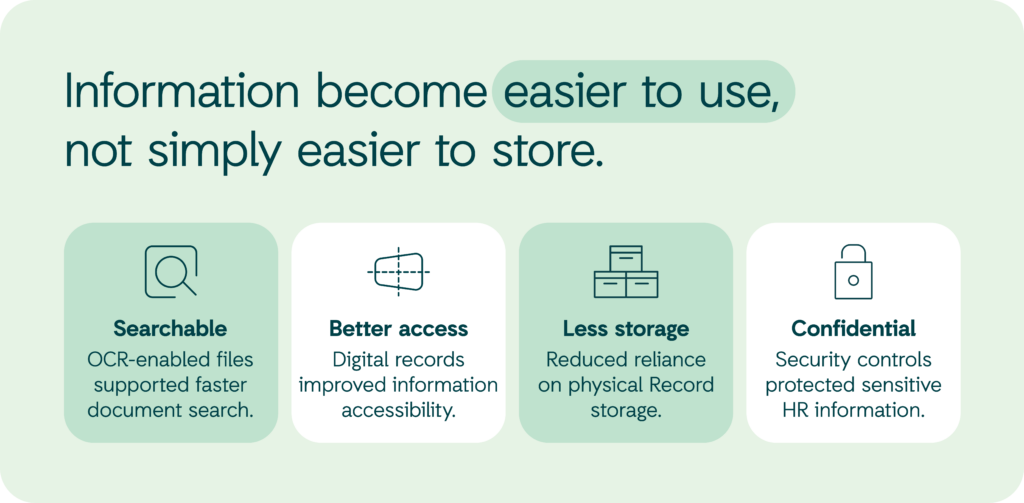
- Easier access to information: Digital records improved accessibility and made employee information easier to retrieve.
- Searchable HR documents: OCR allowed users to search digitized files rather than relying solely on manual document retrieval.
- Reduced reliance on physical storage: Digitization helped the organization reduce the amount of paper that needed to remain in physical storage.
- Improved records management: Indexing and metadata created a more structured approach to managing information.
- Continued protection of confidential information: Security controls and chain-of-custody procedures remained in place throughout the project.
- Project milestones delivered on time: Crown completed the agreed project milestones while maintaining quality control requirements for scanning, indexing and OCR processing.
A strong indication of project success
The project created value beyond the initial digitization requirement.
Following completion of the UAT period, the organization began discussions with Crown about an additional phase of digitization services.
For organizations considering a large-scale document digitization project, this demonstrates an important point: successful digitization is not measured simply by how many documents are scanned.
It is measured by whether the resulting information becomes easier to access, manage and use while remaining properly protected.
Why is secure HR records digitization important?
HR documents can contain personal, employment and other confidential information.
A digitization project therefore needs controls around the documents before, during and after scanning.
Crown’s approach combines document processing with records management practices such as restricted access, indexing, quality control, chain of custody and retention handling.
This helps organizations move from paper-based records to digital information without losing control over sensitive documents during the transition.

Considering digitizing your organization’s records?
If your organization is managing large volumes of paper documents, digitization can help make information easier to find while reducing dependence on physical storage.
Crown provides document digitization services for organizations that need secure processing, structured indexing, OCR and controlled records handling.
Whether you are managing HR records, operational documents or other business information, the first step is understanding what needs to be digitized, how the information will be used and what should happen to the original documents afterward.
Talk to Crown about your document digitization requirements.

