 International
  Bahrain
  Cambodia
  China
China  Hong Kong
  India
India  Indonesia
  Ireland
  Italy
Italy  Japan
Japan  Malaysia
  New Zealand
  Philippines
  Singapore
  South Africa
  Taiwan
  Thailand
  United Arab Emirates
  United Kingdom
  United States
  Vietnam
  Records Management
  Digital Solutions
  Secure Destruction
  By Industry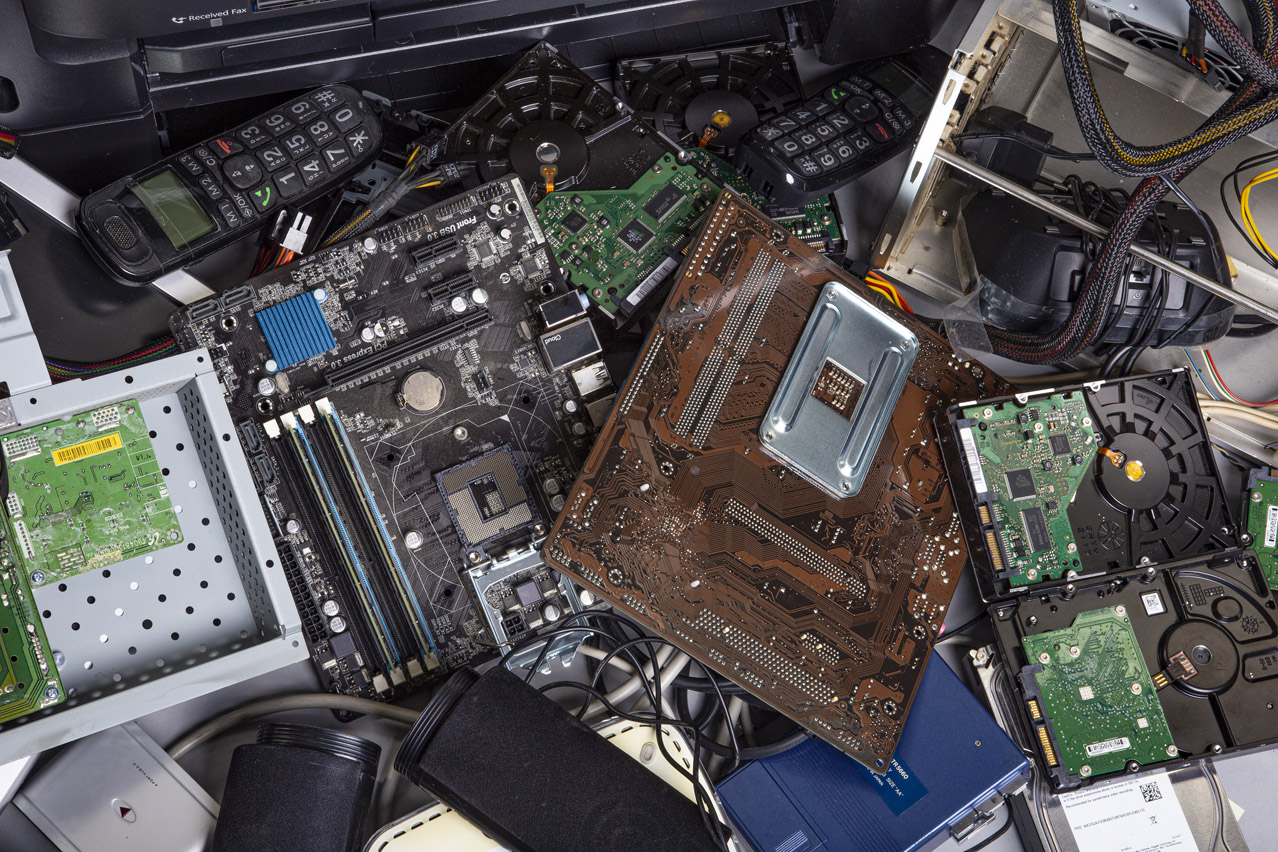
Managing end-of-life IT assets to reducing data security risks
Old IT assets rarely disappear quickly from the workplace.
A few laptops are kept after employees leave. Old desktops sit under desks. Hard drives are removed and placed in drawers. Mobile phones, monitors, network devices and servers are stored in boxes because no one is quite sure what to do with them.
On the surface, these may look like unused office equipment. In reality, many of them may still contain sensitive business information.
For organisations in Hong Kong, IT asset disposal is more than just an administrative task. It plays an important role in data protection, information security, compliance, audit readiness and environmental responsibility. As businesses continue to manage growing volumes of digital information, it is essential that end-of-life IT equipment is handled appropriately and securely.
This is why proper IT Asset Disposition (ITAD) should form part of an organisation’s asset lifecycle management process. When devices reach the end of their useful life, a structured ITAD programme can help organisations protect sensitive information, support compliance requirements and reduce unnecessary risk.
Old IT assets still carry business risk
Most workplace devices process or store sensitive information at some point during their lifecycle. A laptop may contain customer records, contracts, emails, financial documents, employee information or login credentials. A mobile phone may store business messages, contact lists, files, photographs and access to corporate applications. Servers and hard drives may contain years of operational and business-critical data.
Even when a device is no longer in use, the information stored on it may remain accessible if it has not been properly managed, sanitised or destroyed.
This creates a hidden risk for organisations. While the equipment itself may no longer have any business value, the information it contains may still be valuable to cybercriminals, unauthorised parties or anyone seeking access to sensitive data.
For businesses in Hong Kong, where organisations are expected to protect personal data, commercial information and customer records, end-of-life IT assets should be treated as an information security and data governance issue rather than simply an equipment disposal exercise.
Deleting files is not always enough
Many organisations assume that deleting files, formatting a hard drive or performing a factory reset is sufficient before disposing of old IT equipment. While these actions may remove visible access to information, they do not always provide the level of protection required for the secure disposal of corporate devices.
This is particularly important for organisations that handle customer records, employee information, financial data, healthcare records, legal documents or other forms of sensitive business information.
If a device leaves the organisation without appropriate data sanitisation or secure destruction, the business may lose control over the information stored on it. Even if a device is no longer in use, the data it contains may still be recoverable.
For organisations in Hong Kong, where protecting personal data and confidential business information is a key governance and compliance responsibility, proper data sanitisation should form an essential part of the IT asset disposal process.
That is where the risk begins.
Common devices that may still hold data
Data security risks are not limited to laptops and desktop computers. Many workplace devices can store sensitive information, including:
- Laptops and notebooks
- Desktop computers and workstations
- Hard drives and solid-state drives (SSDs)
- Servers and storage devices
- Mobile phones and tablets
- Network devices, routers and firewalls
- Printers, scanners and multifunction devices
- CCTV and video surveillance equipment
- Docking stations and removable storage media
Some of these assets may appear harmless because they are old, damaged or no longer in use. However, this does not necessarily mean the information stored on them has been removed.
Without proper data sanitisation or secure destruction, sensitive business information may remain accessible long after a device has reached the end of its useful life.
Why IT Asset Disposition (ITAD) matters
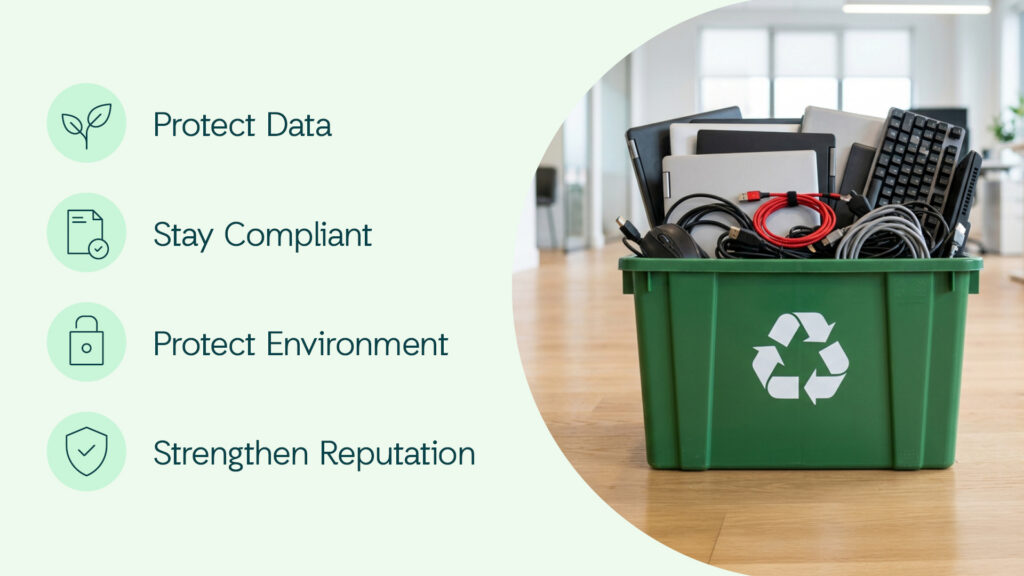
IT Asset Disposition (ITAD) provides organisations with a structured and secure approach to managing end-of-life technology assets. A well-defined ITAD process helps businesses identify which assets are being disposed of, separate data-bearing devices from general e-waste, apply the appropriate method of data sanitisation or destruction, and maintain records of the disposal process.
This is important for multiple functions across the organisation:
- For IT teams, it helps reduce the risk of data leakage and unauthorised access to sensitive information.
- For compliance and risk teams, it supports internal governance, audit readiness and regulatory compliance requirements.
- For finance teams, it helps maintain accurate and up-to-date asset registers.
- For administration and facilities teams, it enables the safe removal of obsolete equipment while freeing up valuable office and storage space.
- For senior management, it supports a responsible approach to information security, corporate governance and environmental sustainability.
For organisations in Hong Kong, where data protection, information governance and accountability are becoming increasingly important, ITAD should form part of a broader risk management and asset lifecycle strategy.
In short, ITAD helps ensure that obsolete IT equipment is managed in a secure, controlled and documented manner, rather than being handled as routine office waste.
The environmental side of IT Asset Disposition
Poor disposal of electronic waste can also create environmental challenges. Many electronic devices contain materials that should not be discarded together with general waste. Responsible IT asset disposal helps reduce the risk of potentially harmful materials entering landfill sites while supporting the recovery, refurbishment or recycling of reusable components wherever possible.
For organisations, this is part of responsible business practice. It also demonstrates a commitment to both information security and environmental sustainability, ensuring that end-of-life IT assets are managed in a secure and environmentally responsible manner.
What a secure ITAD process should include
A secure IT Asset Disposition (ITAD) process should be structured, controlled and fully documented. At a minimum, organisations should look for the following:
- Secure collection, transportation and handling of IT assets
- Identification of devices that contain data
- Certified data erasure, degaussing or physical destruction, depending on the asset type
- Responsible recycling or disposal of electronic waste
- Documentation and audit trails for internal records
- Support from an experienced provider specialising in secure destruction, information management and IT asset disposal
The most important principle is to avoid informal disposal practices. Passing obsolete devices to unknown third parties, general scrap collectors or unverified disposal channels may appear convenient, but it can expose organisations to unnecessary data security, compliance and reputational risks.
For businesses in Hong Kong, a secure ITAD process helps ensure that end-of-life technology assets are disposed of in a manner that supports information governance, data protection and responsible environmental management.
How Crown Information Management Hong Kong can help
Crown Information Management Hong Kong provides secure IT Asset Disposition (ITAD) and e-waste disposal solutions to help organisations manage end-of-life IT equipment securely, responsibly and in accordance with their information governance requirements.
Our services include data erasure, degaussing and physical destruction, depending on the type of device, the condition of the asset and the organisation’s security and compliance requirements.
Whether an organisation is disposing of old laptops, desktop computers, mobile phones, hard drives, monitors, servers or other IT equipment, Crown Information Management Hong Kong can help ensure these assets are managed through a secure, controlled and documented process rather than being left in storage or disposed of through unverified channels.
One data breach could cost more than you think. Secure your retired IT assets with Crown's certified ITAD services.
Request a Free Consultation
